



Grand Tour of Armenia — 6 Nights Armenia
Yerevan
Overview
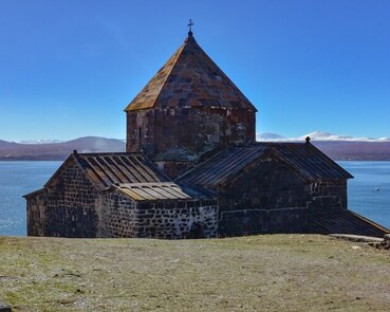
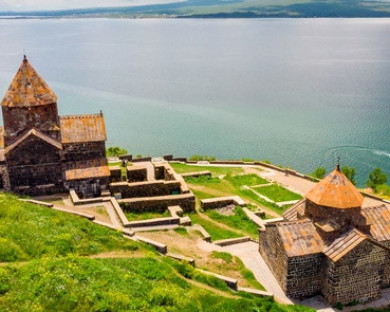
Begin your journey in Yerevan, where a local representative will welcome you on arrival and arrange your transfer to your hotel in the city. Yerevan, the capital of the Republic of Armenia and historically the 12th capital of Armenia, is among the world’s most ancient continuously inhabited cities. The city’s many museums, monuments, and churches reflect its profound spiritual, cultural, and scientific standing. With its remarkable historical and cultural legacy, distinctive architecture, growing modern infrastructure, and the renowned warmth of Armenian hospitality, Yerevan draws an increasing number of visitors from around the globe and continues to strengthen its reputation as a leading travel destination. After check‑in, the remainder of the day is at leisure. On the next day, after breakfast at the hotel, explore Yerevan, often called the “Pink City” because of the volcanic tuff stone that lends the government buildings their characteristic hue and creates a delicate pastel skyline around the city center. Verdant hills surround this 13th capital of Armenia, softening the traces left by a turbulent past. Yerevan’s neoclassical squares recall Vienna, while its broad boulevards evoke the charm of Paris. The city is celebrated for its elegant squares and parks, historic landmarks, and culinary specialties such as dolma. One of the world’s oldest cities, Yerevan harmoniously blends its ancient heritage with modern life; new monuments, fountains, memorials, and green spaces coexist with centuries‑old architecture, forming a cohesive urban tapestry. Radiating outward like sunbeams, the streets encourage long, pleasant walks. The generally dry climate, hot summers, clear skies, and intense sunlight flood the city with brightness. From almost any elevated point, visitors can admire impressive views of Mount Ararat, the iconic backdrop to the Armenian capital. During the city tour, visit major sights including St. Gregory the Illuminator Cathedral, Republic Square, and Marshal Baghramyan Avenue. You will also visit the Tsitsernakaberd Memorial Complex, dedicated to the victims of the Armenian Genocide, followed by a stop at Victory Park to view the Mother Armenia monument and enjoy a sweeping panorama of central Yerevan. The tour also features a stroll along Northern Avenue and a visit to the Cascade complex, an open‑air museum and monumental stairway. On another day, following breakfast, the itinerary focuses on several of Armenia’s most important religious sites, many of them recognized as UNESCO World Cultural Heritage Sites. The excursion begins with visits to the churches of St. Hripsime and St. Gayane, two of the three principal churches in Echmiadzin, both dedicated to Christian women martyrs who fled Rome under the guidance of their abbess, Gayane. You then proceed to the Echmiadzin Mother Cathedral, the main cathedral of the Armenian Apostolic Church and regarded as the world’s first Christian cathedral. At present, the Mother Cathedral is under restoration and can only be viewed from the exterior. Located about 20 km from Yerevan, St. Echmiadzin is the spiritual center of the Armenian Apostolic Church. The Cathedral of Echmiadzin, founded in the early 4th century, is one of the oldest churches globally. Tradition holds that it was erected on the spot where Gregory the Illuminator dreamt of an apparition of Jesus Christ. The interior is adorned with frescoes created by the Hovnatanyan family. Nearby stand the residence of the Catholicos and the Theological Academy. Since late 2018, ongoing restoration work has restricted access to the interior, so visits currently take place only outside. This site is inscribed on the UNESCO World Cultural Heritage List. The tour also covers the ruins of the Zvartnots temple, a 7th‑century architectural marvel that showcases the ingenuity and daring of medieval Armenian builders. Originally constructed on multiple columns, Zvartnots remained standing until the 10th century. During excavations in the early 20th century, many experts were initially skeptical of the reconstruction design proposed by the noted Armenian architect Toros Toramanyan, as the scale and complexity of the structure seemed extraordinary for its era. Evidence later emerged in the form of a bas‑relief on the St. Chapelle church in Paris, depicting Zvartnots with Noah’s Ark and closely resembling Toramanyan’s model, thereby confirming his vision. Zvartnots is also listed as a UNESCO World Cultural Heritage Site. Another included excursion, after breakfast at the hotel, takes you to the village of Garni, about 37 km from central Yerevan, renowned for its ancient pagan temple of the same name. Prior to the adoption of Christianity, Armenian architecture was strongly influenced by Hellenistic design, and the Temple of Garni is a striking example, with its classical colonnade on all sides and dramatic position atop a hill separated from the surrounding mountains by a deep gorge. Reconstructed in 1976, the temple now welcomes large numbers of visitors each day. Since 2011, it has been honored with a UNESCO heritage award. The surrounding landscape of rugged mountains, steep canyons, and resonant echoes creates a memorable atmosphere that invites repeat visits. Continuing to Geghard, your first impressions will come not from the church towers but from the music that fills the air along the ascent, where local musicians greet guests with traditional melodies. Stalls offering dried fruits, sweet sujukh, honey, and other local specialties line the path. At the top of the hill, you enter the monastery complex of Geghard, largely carved directly into the rock face. This masterpiece of medieval Armenian architecture consists of a main chapel, two rock‑hewn chambers, and several tombs. In the first cave hall, a natural cold spring continues to draw attention; many believe its waters possess healing and rejuvenating properties. The name “Geghard” translates as “holy spear,” a reference to the spear reputed to have pierced Jesus Christ during the Crucifixion, which was once kept here. Since 2000, Geghard and its surroundings have been included in the UNESCO World Heritage list. The tranquil sound of the nearby Azat River, the sight of pigeons circling above the church, and the cool air rising from the gorge all enhance the sense of discovery. A further day’s program, following breakfast, leads into southern Armenia. The excursion begins with a visit to the "Hin Areni" wine factory in the village of Areni, where you will tour the facilities and enjoy a tasting of the estate’s renowned wines. The region of Vayots Dzor, and Areni in particular, has been a cradle of Armenian winemaking for thousands of years. "Hin Areni" wine factory showcases indigenous Armenian grape varieties and marries age‑old winemaking traditions with advanced modern technology. The winery can process more than 250 tonnes of grapes. The journey continues to Shaki waterfall, located near Sisian in the Syunik province, a picturesque cascade set in one of the most charming corners of the region, where rushing waters reveal a dramatic natural spectacle. The air here is filled with the sound of falling water and the fresh scent of the surrounding mountains. The tour then proceeds to Tatev Monastery, a former spiritual hub that also held major political and intellectual importance. Among the architectural landmarks of Zangezour, Tatev stands out as unrivalled. It was once the wealthiest medieval monastery in Armenia and served as a vital strategic stronghold of the Syunik kingdom. Setting on naturally fortified terrain, Tatev Monastery remained an impenetrable fortress in times of foreign threat. During unstable political periods, several hidden passages within the complex connected the monastery to the canyon below, allowing discreet movement to and from the outside world. On 16 October 2010, the bells of Tatev rang out to mark the inauguration of a large‑scale restoration initiative and the opening of the “Wings of Tatev Ropeway.” This 5.7 km cable car, constructed in just 11 months, spans the deep Vorotan River Gorge and passes over forested hills. Three supporting towers link the two terminal stations: one above the village of Halidzor and the other close to Tatev Monastery on the road to the village of Tatev. Two cabins shuttle simultaneously in opposite directions, each supported by three cables, for a total of six. In approximately 11 minutes, each cabin can carry up to 30 passengers from Halidzor to the magnificent Tatev complex. Another day, after breakfast, is devoted to exploring Armenia’s northern landscapes. This excursion is ideal for travelers who enjoy outdoor activities and appreciate sustainable tourism as they discover unspoiled nature, dramatic gorges, and lively towns. Departing from Yerevan and heading north, you will first encounter Lake Sevan, one of Armenia’s defining natural landmarks. This high‑altitude lake, at around 1900 meters above sea level, is the country’s largest reservoir of fresh water and the most extensive body of water in the entire Caucasus. Its intense blue surface, encircled by mountain ranges, creates a captivating scene. A small peninsula juts into the lake, crowned by the monastery of Sevanavank, a complex of several structures dating back to at least the 18th century and still active today. From this vantage point, the lake and mountains appear to merge seamlessly, blurring the line between land and water. The shimmering waves often evoke the sense of gazing upon the sea, an association rooted in early Armenian sources where Sevan was known as the “Geghama Sea” or simply “the sea.” The surrounding environment combines rocky shores with clusters of pine trees along the coast, generating a tranquil ambiance and a feeling of inner calm. From Lake Sevan, the road leads onward to Dilijan, frequently referred to as “little Armenian Switzerland” thanks to its lush forests and alpine scenery. Encircled by woodlands, Dilijan resembles a storybook mountain town. It has long been an intellectual and cultural center, home to many Armenian artists and scholars, as well as various educational institutions, specialized schools, a sports complex, and branches of state organizations. The presence of students and creative communities infuses the town with youthful energy. Visitors are encouraged to pause, listen to the wind, and absorb the atmosphere, from Lake Parz and the thick forests to the open‑air amphitheater, local museums, and historic monasteries. On the final day, after breakfast at the hotel, you will be transferred to the airport for your onward flight, taking with you lasting memories of your Armenian journey.
Itinerary
Arrive in Yerevan, where a local representative will greet you at the airport and arrange your private transfer to your hotel in the city. Yerevan, the capital of the Republic of Armenia and historically the 12th capital of Armenia, is among the world’s oldest continuously inhabited cities. Its many museums, churches, and monuments testify to its significant spiritual, cultural, and scientific role throughout the centuries. A unique architectural style, expanding urban infrastructure, deep historical and cultural roots, and the famously warm Armenian hospitality have turned Yerevan into an increasingly popular travel destination globally. After checking in at your hotel, the remainder of the day is free for you to relax or explore at your own pace.
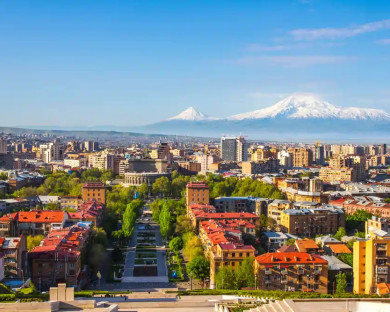
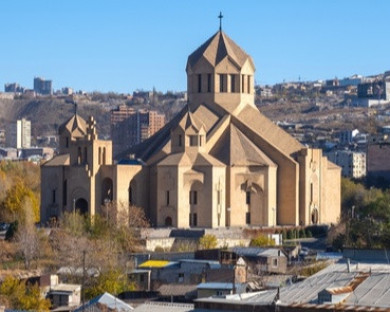
After breakfast at the hotel, begin a comprehensive city tour of Yerevan. Often described as the “Pink City” because of the volcanic tuff stone that colors many government and public buildings, Yerevan forms a soft pastel panorama at its core. Green hills encircle this 13th Armenian capital, gently concealing signs of its turbulent history. The city’s neoclassical plazas recall Vienna, while its broad avenues exude a Parisian flair. Known for its spacious squares, leafy parks, historical monuments, and renowned cuisine including traditional dolma, Yerevan is one of the world’s most ancient cities where past and present co-exist harmoniously. Modern constructions, fountains, memorials, and new green spaces stand alongside centuries-old architecture, creating a unified, sunburst-like street layout that encourages long yet pleasant walks. The generally dry weather, hot summers, bright blue skies, and abundant sunshine bathe the city in light. From almost any elevated viewpoint, you can enjoy a spectacular panorama of Mount Ararat. During your tour, you will visit key landmarks such as St. Gregory the Illuminator Cathedral, Republic Square, and Marshal Baghramyan Avenue. The itinerary also includes the Tsitsernakaberd Memorial Complex, dedicated to the victims of the Armenian Genocide, and a stop in Victory Park with views of the Mother Armenia monument and a sweeping outlook over the city center. A walk along Northern Avenue and through the Cascade complex, an impressive open-air museum and monumental stairway, completes the experience.
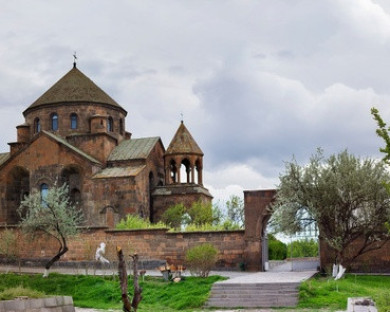
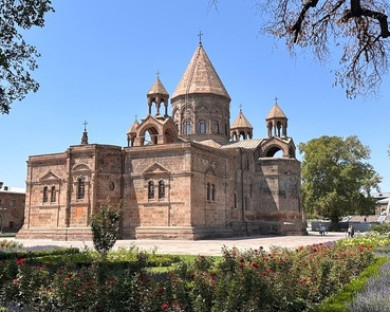
Following breakfast, set out on an excursion devoted to some of Armenia’s most significant religious monuments, several of which are recognized as UNESCO World Cultural Heritage Sites. Your first visits are to the churches of St. Hripsime and St. Gayane in Echmiadzin. These two churches, among the three main sanctuaries in Echmiadzin, are dedicated to Christian women martyrs who fled Rome under the leadership of their abbess, Gayane. You then continue to Echmiadzin Mother Cathedral, the principal cathedral of the Armenian Apostolic Church and considered the first Christian cathedral in the world. At present the Mother Cathedral is undergoing restoration, so it can only be viewed from outside. St. Echmiadzin, located roughly 20 km from Yerevan, serves as the spiritual center of the Armenian Apostolic Church. The Cathedral of Echmiadzin was founded in the early 4th century and is among the oldest churches worldwide. Legend recounts that the church was built on the site where Gregory the Illuminator dreamt of an apparition of Jesus Christ. The church interior is richly decorated with frescoes by the Hovnatanyan family, and the surrounding complex includes the residence of the Catholicos and the Theological Academy. Due to restoration works that began in late 2018 and continue today, visits are limited to the exterior only. The cathedral complex is listed by UNESCO as a World Cultural Heritage Site. The tour also covers the remains of the Zvartnots temple, a 7th‑century masterpiece demonstrating the skill and daring of medieval Armenian architects. Originally constructed on numerous columns, the structure survived until the 10th century. Excavations in the early 20th century led to a reconstruction model by architect Toros Toramanyan that many specialists initially doubted because of its ambitious scale and complexity. Their skepticism was resolved when a bas‑relief on the St. Chapelle church in Paris, depicting Zvartnots together with Noah’s Ark and mirroring Toramanyan’s design, came to light. Zvartnots is likewise included on the UNESCO Cultural World Heritage List.
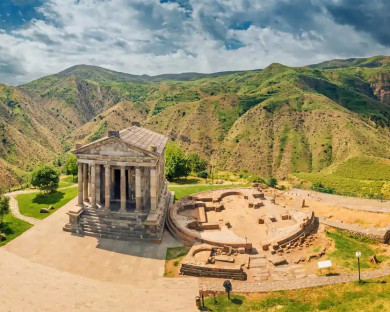
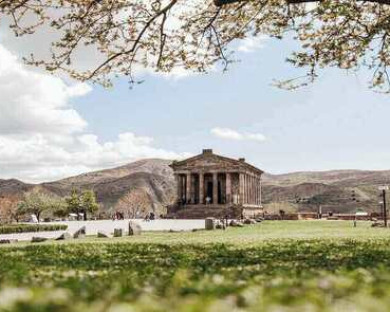
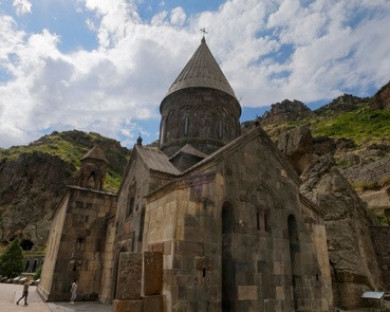
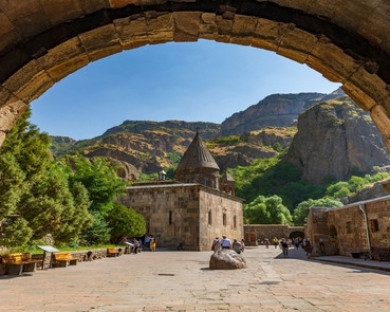
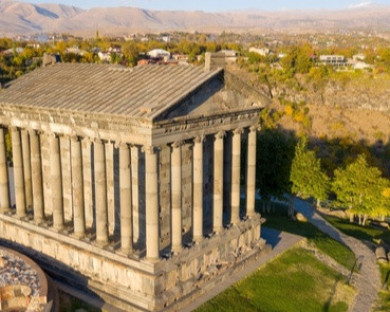
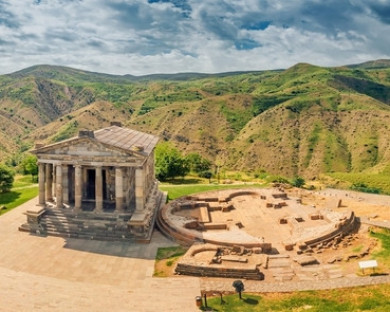
After breakfast at the hotel, travel to the village of Garni, located approximately 37 km from central Yerevan and famous for its ancient pagan temple, also called Garni. Before Christianity became the state religion, Armenian architecture was closely aligned with Hellenistic traditions, and the Temple of Garni is a prime example, with a classical colonnade on all sides and a dramatic situation on a hill separated from the surrounding mountain range by a deep gorge. Restored in 1976, the temple now attracts numerous visitors every day and has been recognized with a UNESCO heritage award since 2011. The area’s rugged mountains, steep canyon, and resonant echoes add to its allure. The journey continues to Geghard, where your first impressions are of the music that fills the ascent to the monastery. Local musicians often perform along the path, greeting guests with lively national melodies. Stalls selling local specialties such as dried fruits, sweet sujukh, and honey lend a fragrant atmosphere. At the top, you enter the monastery complex of Geghard, much of which is carved directly into the rock face. This ensemble of medieval Armenian architecture includes a main chapel, two rock-hewn halls, and several tombs. In the first cave hall, a cold spring still emerges from the rock and is widely believed to have healing, rejuvenating, and beautifying properties. The name “Geghard” means “holy spear,” recalling the lance that, according to tradition, pierced Jesus Christ at the Crucifixion and was once housed here. Geghard and its surrounding valley have been part of the UNESCO World Heritage list since 2000. The murmuring Azat River nearby, flocks of pigeons gliding above the church, and the cool air drifting from the gorge all contribute to a serene and inspiring environment.
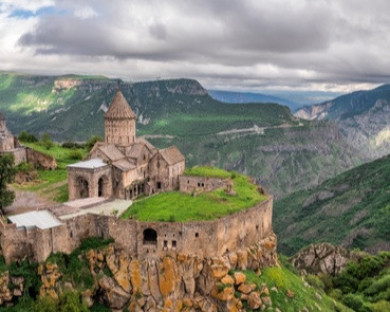
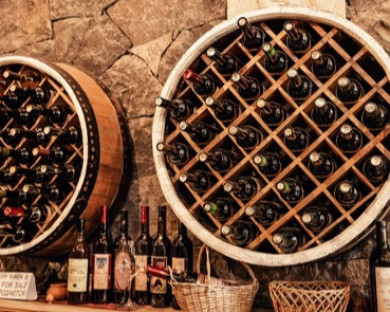
Enjoy breakfast at your hotel before setting off for southern Armenia. The first scheduled stop is the "Hin Areni" wine factory in the village of Areni, where you will take a guided tour of the winery and sample its well-known wines. The Vayots Dzor region, and Areni in particular, has been a center of Armenian winemaking for millennia. "Hin Areni" wine factory introduces visitors to the area’s traditional and indigenous grape varieties, combining time-honored production methods with modern technology. The facility is capable of processing more than 250 tonnes of grapes. Your journey then leads to Shaki waterfall near the town of Sisian in Syunik province. Hidden in one of the most scenic corners of the region, the waterfall reveals an impressive curtain of water that captivates all who visit. The surrounding air is filled with the rhythmic sound of the falling water and the fresh scent of the mountains. The final highlight of the day is Tatev Monastery, once an influential spiritual, political, and scholarly center. Among the architectural monuments of Zangezour, Tatev is unmatched. It used to be the richest medieval monastery in Armenia and, thanks to its naturally defended position, served as a powerful stronghold for the Syunik kingdom. In times of political unrest, several secret passageways within the monastery complex connected it to the canyon below, maintaining a lifeline between Tatev and the outside world. On 16 October 2010, the bells of Tatev marked the beginning of a major revival program for the monastic complex and the inauguration of the “Wings of Tatev Ropeway.” This 5.7 km aerial tramway, constructed in just 11 months, crosses the deep Vorotan River Gorge and passes over forested hills. Supported by three towers between its two terminal stations, the line links a station on a hill overlooking the village of Halidzor with another near Tatev Monastery on the road to the village of Tatev. Two cabins operate simultaneously in opposite directions, each supported by three cables (six in total), designed specifically for this installation. In roughly 11 minutes, each cabin carries up to 30 passengers from Halidzor to the Tatev complex.
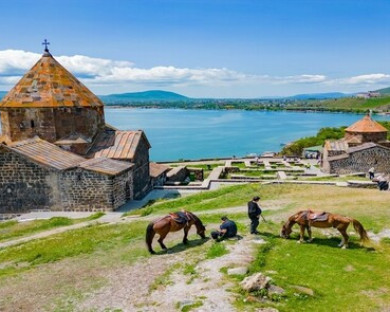
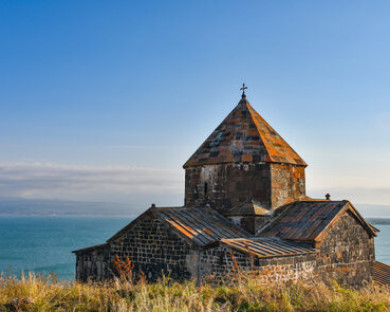
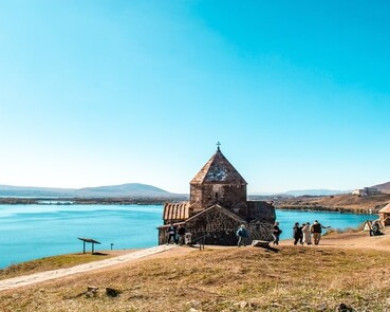
After breakfast, depart Yerevan to explore some of Armenia’s lesser-known natural and cultural treasures in the north. This excursion is ideal for travelers who want to experience unspoiled natural scenery through outdoor activities while being mindful of environmental sustainability. Leaving the capital, you drive along a long highway until the vivid blue expanse of Lake Sevan appears, framed by mountain peaks. Lake Sevan is one of the primary symbols of Armenia. It is the country’s largest source of fresh water and the most extensive lake in the Caucasus region. Situated at about 1900 meters above sea level and surrounded by mountain ranges, Sevan enchants visitors with its deep blue surface and surrounding vistas. A small peninsula extends into the lake, crowned by the Sevanavank Monastery, a complex of several buildings that has survived since at least the 18th century and is still active today. From this vantage point, the mountains and the lake seem to blend together with no clear boundary. The glittering waves under the sun can easily be mistaken for a sea, an association reflected in ancient Armenian texts where Sevan is called the “Geghama Sea” or simply “the sea.” The lakeshore combines rocky outcrops with small pine forests lining the coast, creating a sense of balance and tranquility. After taking in the serene atmosphere of Lake Sevan, continue to Dilijan, affectionately nicknamed “little Armenian Switzerland” thanks to its lush forests and mountain setting. Dilijan is a town of forests, nearly encircled by woodland, and evokes the charm of a storybook village. It is also an intellectual and cultural hub, home to numerous Armenian cultural figures and various educational institutions, specialized schools, a sports complex, and branches of state organizations. This gives the town a youthful, creative energy. The environment encourages you to slow down and listen to nature—the rustling wind, the stillness of the forests, and the beauty of local attractions such as Lake Parz, the amphitheater, museums, and historic monasteries. The day allows ample time to take in this natural and cultural richness.
After enjoying your final breakfast at the hotel, check out and transfer to the airport for your onward flight, carrying with you vivid memories of your Armenian holiday and the many sites visited during your tour.
Itinerary details may vary by travel date.
Inclusion & Exclusion
What's included
Not included
Terms & Conditions
- Any additional expenses incurred due to delay, change, or cancellation of flights, resulting in overstay, will be borne solely by the guests. The tour operator will not be liable for these costs, although every reasonable assistance will be extended.
- If a holiday surcharge applies for specific dates or periods, it will be charged in addition to the quoted price.
- No reservations are currently held for air seats, hotel rooms, conference venues, or similar services; final availability will be known only when actual booking requests are placed.
- Hotel rooms are offered strictly subject to availability at the time of booking.
- All bookings are subject to confirmation and depend on availability at the time of reservation.
- Tour prices are applicable only for Indian nationals and foreigners who hold a valid Indian Resident Permit.
- The quoted price is based on current availability at the time of confirmation; no space is being held as of now, and availability will only be confirmed upon actual booking.
- All prices are quoted in Indian Rupees and may be revised without prior notice.
- Full payment amounting to 100% of the total tour cost must be completed as per the final payment due date.
- A payment of 75% of the total tour cost, or the non-refundable component (whichever is higher), is required as per the payment schedule.
- If cancelled under the applicable conditions, 100% of the amount becomes non-refundable.
- In case of cancellation, 75% of the amount is treated as non-refundable.
- A 30% portion of the amount is non-refundable in the event of cancellation.
Hotel & accommodation
3 Stars · Economy — Ani Central Inn· Standard — 14th Floor· Deluxe — Ani Grand· Premium — Radisson Blu
Exact hotel confirmed after availability check — same category or similar.
Fare summary
Price may change based on travel dates, hotel availability, and traveler count. Final price is confirmed before payment.